Scalping in low volatility conditions requires a shift in mindset: from chasing large momentum moves to patiently harvesting small, consistent gains.
The best forex scalping strategy for these quiet markets is often a mean reversion approach, specifically fading minor extremes using Bollinger Bands on a short time frame.
This method capitalizes on the market’s tendency to revert to its average price during periods of consolidation, which are common in low-volatility environments.
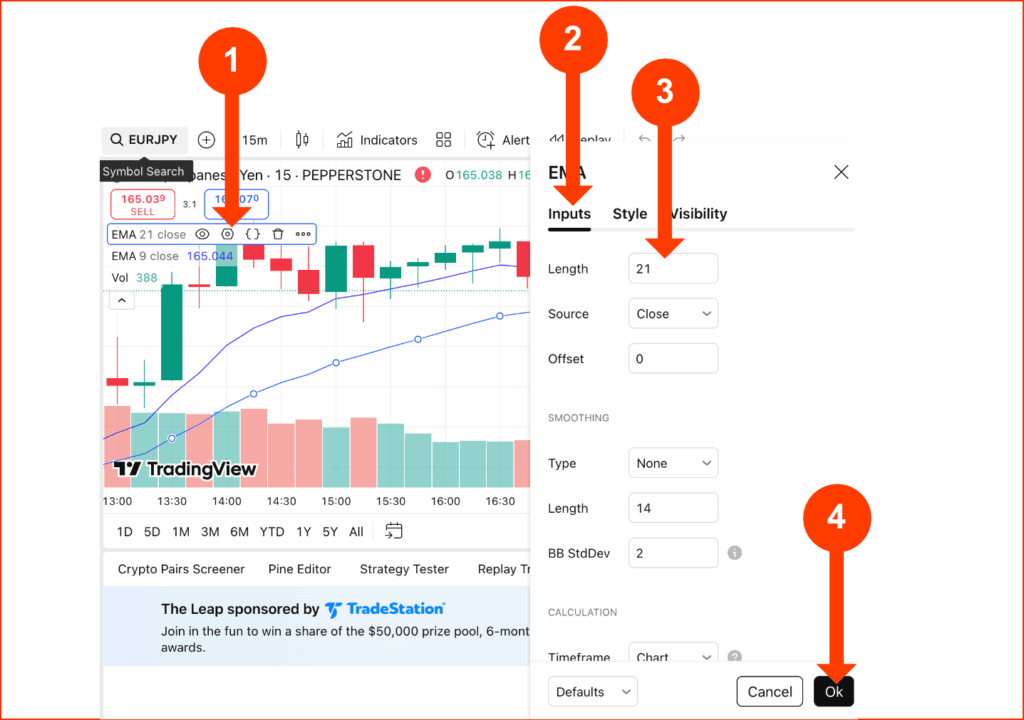
This strategy can be effectively deployed on platforms like MetaTrader 4 or TradingView through a reliable broker such as Pepperstone, which offers the tight spreads crucial for scalping.
Fading Extremes With Bollinger Band Squeezes
During low volatility, the market often enters a tight range, characterized by a “squeeze” in Bollinger Bands. The strategy involves identifying these compression phases and placing trades on the assumption that price will oscillate between the upper and lower bands rather than break out.
The goal is to scalp multiple small profits as price moves from a band back towards the middle moving average, managing risk meticulously on each trade.
- Identify the Squeeze: Apply Bollinger Bands (20-period SMA, 2 standard deviations) to a 1-minute or 5-minute chart. A squeeze is identified when the bands contract significantly, indicating very low volatility.
- Fade the Touch: When price touches or slightly penetrates the upper band, prepare to enter a short (sell) position. When price touches or slightly penetrates the lower band, prepare to enter a long (buy) position.
- Confirm with a Candle Close: For a higher probability entry, wait for the price to close back inside the Bollinger Bands after touching the extreme.
- Set a Tight Take Profit: Aim for a profit target near the middle 20-period Simple Moving Average (SMA). In low volatility, large moves are unlikely; the objective is a small, quick gain.
- Use a Tight Stop Loss: Place a stop loss just on the other side of the Bollinger Band you are fading. For a short trade, the stop would be placed a few pips above the upper band. The risk on each trade must be extremely small.
FAQs
How do I know if market volatility is truly low?
The most objective measure is the Average True Range (ATR) indicator. Apply a 14-period ATR to your chart. A low and falling ATR value confirms a low-volatility environment. A contracting Bollinger Band width visually confirms the same condition.
What are the best currency pairs for low volatility scalping?
Major pairs with typically lower spreads are best, as transaction costs are a primary concern. EUR/USD, USD/CHF, and EUR/CHF often fit this bill during specific sessions. Avoid exotic pairs, as their wider spreads can quickly erase small scalping profits.
What time of day is best for this low volatility scalping strategy?
This strategy can work during the late New York session (after 5:00 PM GMT) or the early Asian session (before the Tokyo open), which are typically the lowest volatility periods. However, always confirm with the ATR or Bollinger Band width rather than assuming.
Why do I need a broker with tight spreads for this strategy?
In scalping, especially for small gains in quiet markets, the spread (the difference between the bid and ask price) is your biggest hurdle. A 2-pip profit is instantly negated by a 1.5-pip spread. A broker like Pepperstone, which offers raw spread accounts, is essential for this style.
Can I use this strategy on a higher timeframe like the M15?
While the core concept is the same, scalping is defined by its short time horizon and quick trades. On the M15, the Bollinger Band squeeze setup is more suited to a swing or day trade holding for several hours. For true scalping, the M1 or M5 is more appropriate.
Final Thoughts
Scalping in low volatility is a game of precision and discipline, where risk management and low transaction costs are paramount.
The Bollinger Band mean reversion strategy provides a clear, rule-based framework for navigating these challenging conditions. Success hinges entirely on a broker that provides the necessary infrastructure: ultra-low latency execution, tight and stable spreads, and a reliable trading platform.
This is why choosing a broker like Pepperstone, which specializes in low-cost access and seamless MT4/TradingView integration, is a significant advantage for any scalper. Other brokers renowned for their scalping-friendly conditions, such as IC Markets or FP Markets, are also excellent choices.
By adapting your approach to the market’s rhythm and prioritizing cost efficiency, you can turn quiet market periods into a viable opportunity.
Trade Smarter with Pepperstone

Pepperstone

Elias Stroud is a professional forex trader and market analyst with over eight years of experience. His journey began with the common misconception that trading was a get-rich-quick scheme, a path that led to significant early losses. It was this initial failure that forced a pivot towards disciplined, long-term learning and strategy development.
Today, Elias specializes in price action analysis, focusing on identifying high-probability setups without relying on complex indicators. He has cultivated a premium-level trading account, a direct result of his commitment to a structured and professional approach to the markets. Elias is passionate about sharing the actionable insights and foundational principles that helped him transform from a novice to a consistently profitable trader.
For further verification of his professional standing and live trading credentials, please visit the “About Us” page where account confirmation screenshots are provided, along with links to his trusted broker, Pepperstone, and his primary charting platform, TradingView.